
Our country started to develop long before 1776 but if a year needs to be pinpointed the signing of the Declaration of Independence is a good pinpoint. We all learn these important historical dates in school. For example, in honor of Presidents Day we might learn about of first President , George Washington.
Without these wonderful men and their idea of living a life without dictatorship, a life of freedom, we would not be the country we are. We do need to acknowledge that these men were not perfect men, and freedom was only for certain people.
George Washington was a slave owner from the moment he built his plantation he went in search of human beings to buy to work the land. In his death he wrote into his will that he no longer viewed slavery as a moral act and he freed all of his slaves; his wife honored that request.
I think we all know the rest. Washington’s plantation becomes a national park, preserved so all can relive a moment of history. The problem with history is it does not always include everyone in the telling. Such is the story of the slave cemetery at Washington’s Mount Vernon.
Very few written accounts from the 19th century mention the graves and only as a historic site. A map from 1885 of the Mount Vernon estate list the acre of land as a burial ground.

In 1929 a marker was placed at the site of the “burial ground”. It as soon overgrown with vegetation and all but forgotten in the Jim Crow era of Virginia. In 1980 a group went searching for the burial grounds and discovered the original memorial marker from 1929. It was decided that a memorial marker fitting of a cemetery should be erected.

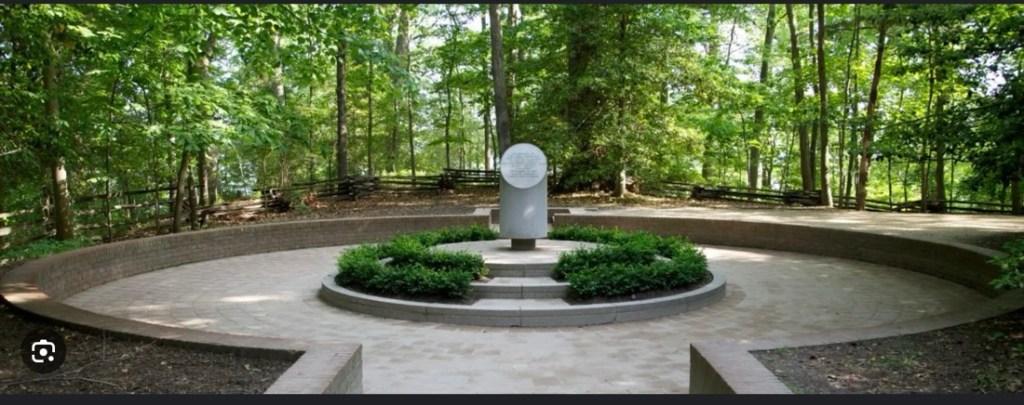
Fast forward to 2014 and with the help of drones and new technology that allows visualization of graves beneath the earth, it was revealed that up to 150 souls were laid to rest on the acre.
There were a few very disheartening parts about the slave cemetery research. I found it odd that the first marker listed them as “servants”. They were called slaves back then why were they listed as servants, and who felt comfortable altering the history vocabulary. The map had a place clearly marked as a burial for Negros but it wasn’t until 1929 that anybody bothered to present this history as part of the tour at Mount Vernon. It was simply overgrown and forgotten for another 50+ years. The 1983 memorial is beautiful but again it took another 30+ years for discovery. This is a good example of how we as a society decide whose story should and should not be told, or how it should be told.
 Stories of Loss & Life